












The Ultimate Guide to Stock Investing: A Proven Path to Financial Freedom
 Phil Town
The Promise: Taking Control of Your Financial Destiny
The stock market is the single greatest wealth-creation engine in history. Yet, for many, it feels like a closed club: intimidating, confusing, and reserved for Wall Street insiders. But here's the truth: you don't need a finance degree, a Wall Street address, or a mountain of cash to start building real wealth. You just need the right education, a proven strategy, and the willingness to take control of your financial future.
At Rule #1 Investing, we believe that anyone, yes, anyone, can learn to invest successfully. I am living proof. Once a Grand Canyon river guide earning $4,000 a year, I learned the principles of value investing from a mentor and transformed my life. Today, I'm a hedge fund manager, a New York Times bestselling author, and the teacher behind a movement that's empowered over two million people worldwide to take charge of their money.
This stock investing guide is your invitation to join us.
Whether you're just starting out and wondering, "How do I invest in stocks?" or you're looking to sharpen your strategy and achieve true financial freedom, you're in the right place. Here, you'll find a complete, time-tested framework for investing with certainty, one that's helped everyday people retire early, build generational wealth, and finally feel confident about their financial future.
What You'll Discover in This Guide:
The simple, powerful steps to start investing, no jargon, no guesswork.
How to pick stocks like the world's best investors, using a proven system.
The Rule #1 philosophy that puts you, not Wall Street, in control.
Actionable strategies for building wealth, protecting your money, and creating a legacy for your family.
Why Are You Here? The Real Reason to Start Investing
Take a moment and ask yourself: Why are you researching investing right now? Is it because you want to build wealth, retire early, or simply feel more secure about your financial future? For most people, the answer is simple: you want the freedom to live life on your own terms, without worrying about running out of money.
The Reality: Retirement Isn't What It Used to Be
Whether you are figuring out how to invest in the stock market for beginners or you have been at it for years, the reality is the same: the days of relying on a pension or Social Security alone are gone.
Today, if you want to retire, and especially if you want to retire comfortably, you need to take control of your financial destiny. The stock market is the most powerful tool available for building the kind of wealth that can support you and your family for decades to come.
But here's the good news: You don't have to be a Wall Street expert to make it happen. With the right education and a proven strategy, you can start investing for your future, no matter your age or experience level.
Will You Have Enough to Retire Comfortably?
Most people don't know how much they'll actually need to retire, or if they're on track. That's why we created the Rule #1 Retirement Calculator, a simple, free tool that shows you exactly how your investments can grow over time, and what it will take to reach your retirement goals.
Want to see how it works? Watch our step-by-step YouTube tutorial on using the Retirement Calculator.
https://youtu.be/g6IpQ2Y96C0?feature=shared
Take a few minutes to run your own numbers. You might be surprised at how achievable your dreams really are.
Now that you know why investing matters, let's get you started on the right path.
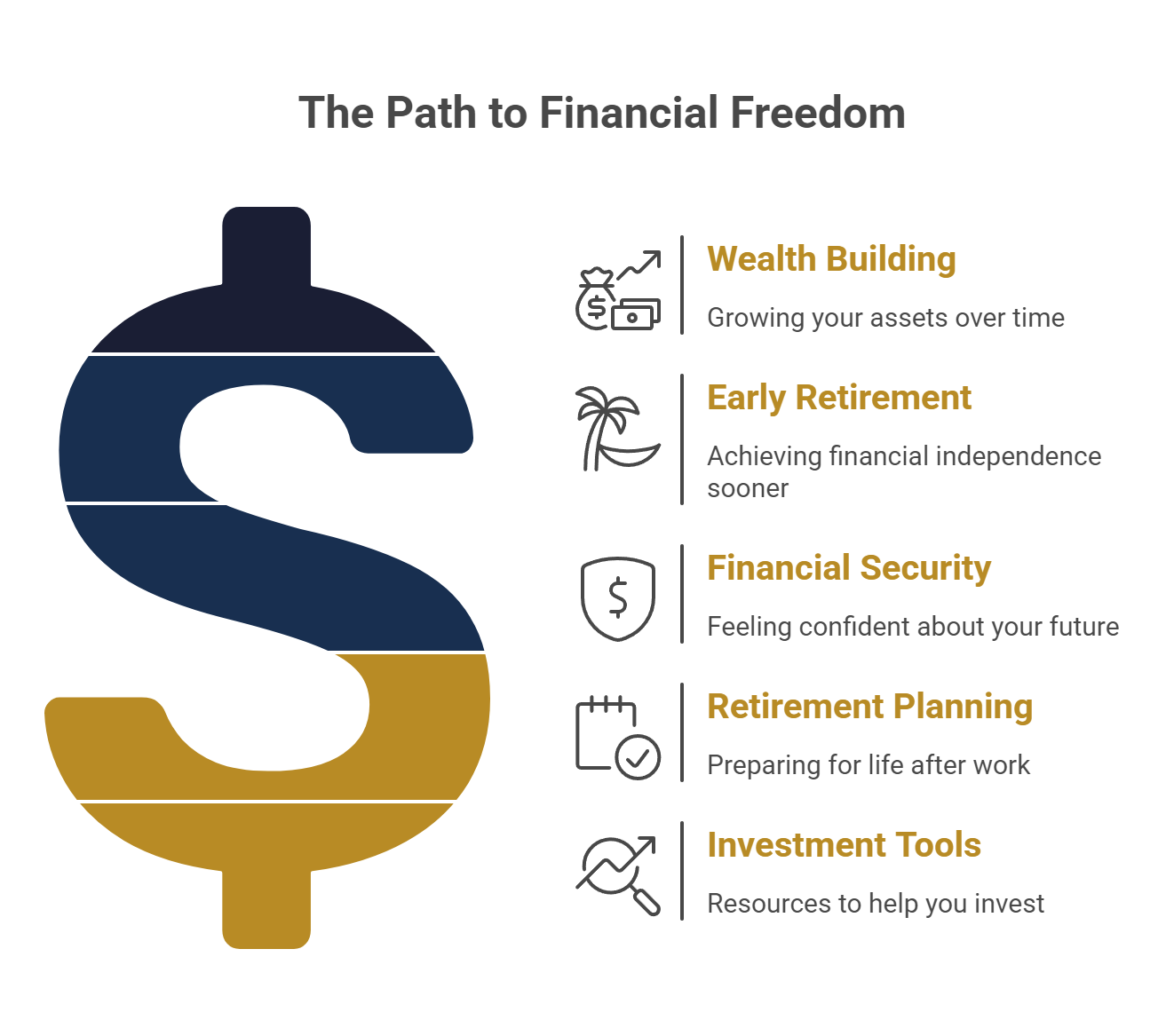
Why Saving Without Investing Is Quietly Costing You Money
Here is something most people discover too late: keeping your money in a savings account is not a neutral decision. It looks safe. But in real terms, it is a slow, guaranteed loss.
Inflation averages about 3% per year. That means the purchasing power of your savings erodes every single year, even when the balance looks the same. A dollar saved today will have roughly 40 cents of buying power in 30 years. Your savings account is not protecting your future. It is falling behind it.
The stock market feels like the risky option. But doing nothing while inflation quietly erodes your savings? That is the real risk. And it is one you can do something about.
The Retirement Math Most People Never See
Most people I meet at workshops have been doing everything right. Saving diligently. Contributing to their 401(k) every month. Trusting fund managers to handle the rest. What they do not realize is that the math has been quietly working against them the whole time.
Here is the part the financial industry never advertises: only 4% of mutual fund managers beat the market over 15 years. The other 96% underperform a basic index fund. And they charge you fees every single year no matter what. Those fees compound against you over a lifetime, eating up a significant chunk of your total gains.
In my book Payback Time, I ran the numbers on a typical couple. $50,000 in mutual funds, adding $10,000 a year, spending $50,000 in retirement. At average fund performance, they run out of money within five years of stopping work. And this is not unusual. Only 15% of Baby Boomers have saved more than $500,000.
The mutual fund system was not built for you. It was built for the people managing your money. Learning to invest yourself is how you change that equation entirely.
Are You New to Investing? Here's How to Get Started in 5 Minutes
If you are wondering how to invest in the stock market for beginners, you are not alone. Most people feel overwhelmed by the options, jargon, and conflicting advice out there.
The good news? Getting started is much simpler than you think, and you don't need a finance background or a lot of money to begin. In fact, the most important decision you'll make as a new investor isn't about which stock to buy or which account to open. It's about choosing the right path: the conventional way or the Rule #1 way.
To help you get started, here's a quick, no-nonsense guide that will set you up for success in just five minutes.
What is a Stock?
A stock isn't just a ticker symbol or a number on a screen. It's ownership in a real business. When you buy a stock, you're buying a piece of a company, sharing in its profits, growth, and future. This "business owner" mindset is the foundation of successful investing.
Where Do You Buy Stocks?
To buy stocks, you'll need a brokerage account. Think of it as your gateway to the stock market, a simple online account where you can buy, sell, and hold shares of companies. Opening a brokerage account today is easier than ever, with many platforms offering low fees and user-friendly tools.
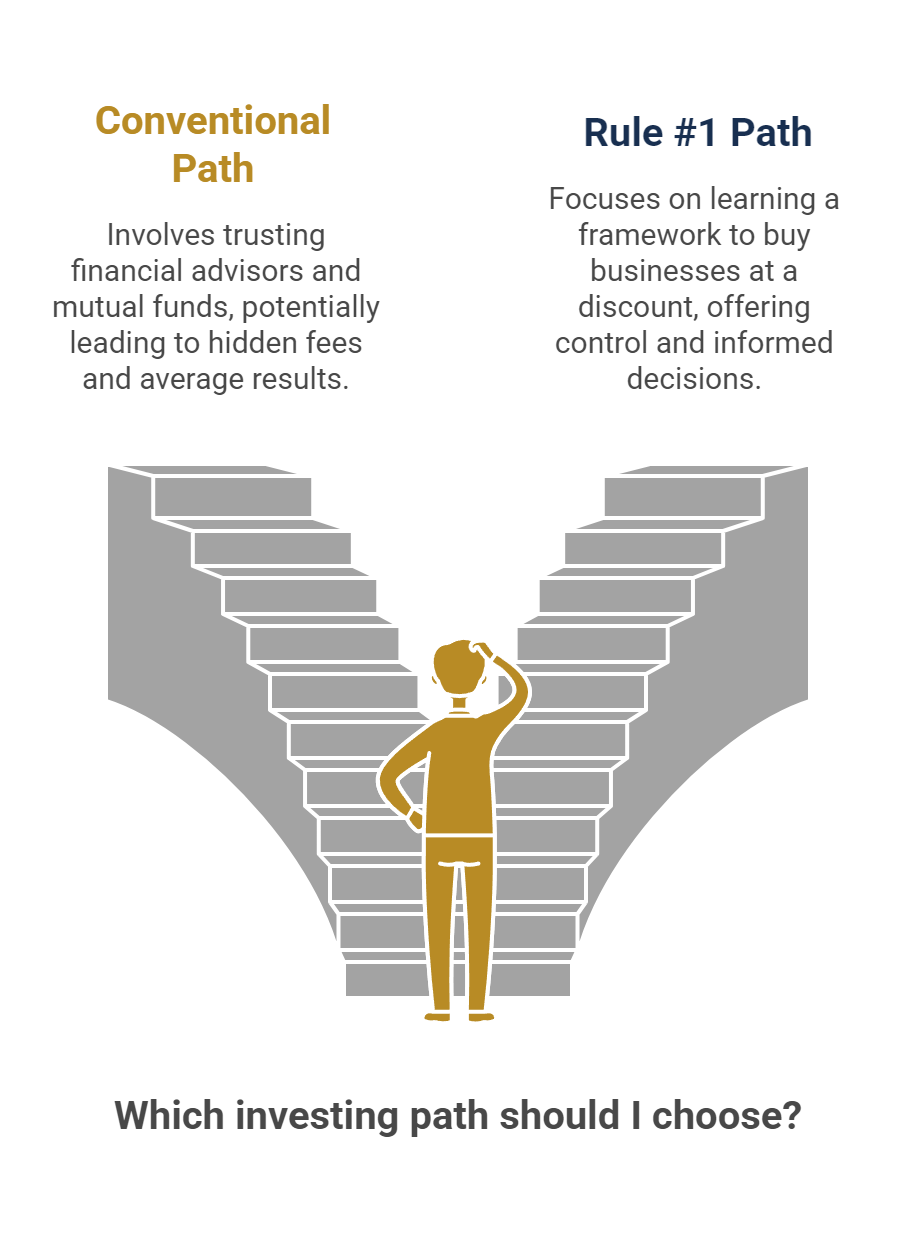
The Critical Choice: The Conventional Path vs. The Rule #1 Path
The Conventional Path (Wall Street's Way)
Most people are told to hand their money over to a financial advisor or put it in a mix of mutual funds they don't really understand. This approach often means paying hidden fees, having little control, and settling for average results. You're trusting someone else to care about your money as much as you do, and that's rarely the case.
The Rule #1 Path (The Investor's Way)
At Rule #1, we believe you deserve better. The Rule #1 Path is about learning a simple, proven framework to buy wonderful businesses at a discount, yourself. It's about taking control, making informed decisions, and building wealth on your terms. You don't need to be a math genius or a Wall Street insider. You just need the right education and a willingness to learn.
If you believe in taking control and investing with certainty, the Rule #1 Path is for you. The rest of this guide will show you exactly how it's done, step by step.
Ready to move beyond the basics? Let's dive into the philosophy that sets the world's best investors apart from the crowd.
Forget Wall Street's Rules: Adopt the Mindset of a True Investor
If you want to achieve extraordinary results, you can't settle for ordinary thinking. The world's best investors like Warren Buffett and Charlie Munger don't follow the crowd. They follow a set of timeless principles that put them in control, help them avoid costly mistakes, and allow them to build real, lasting wealth. At Rule #1 Investing, we believe you can do the same.
Let's break down the core philosophies that separate true investors from the rest.
The Only Rule That Matters: "Don't Lose Money"
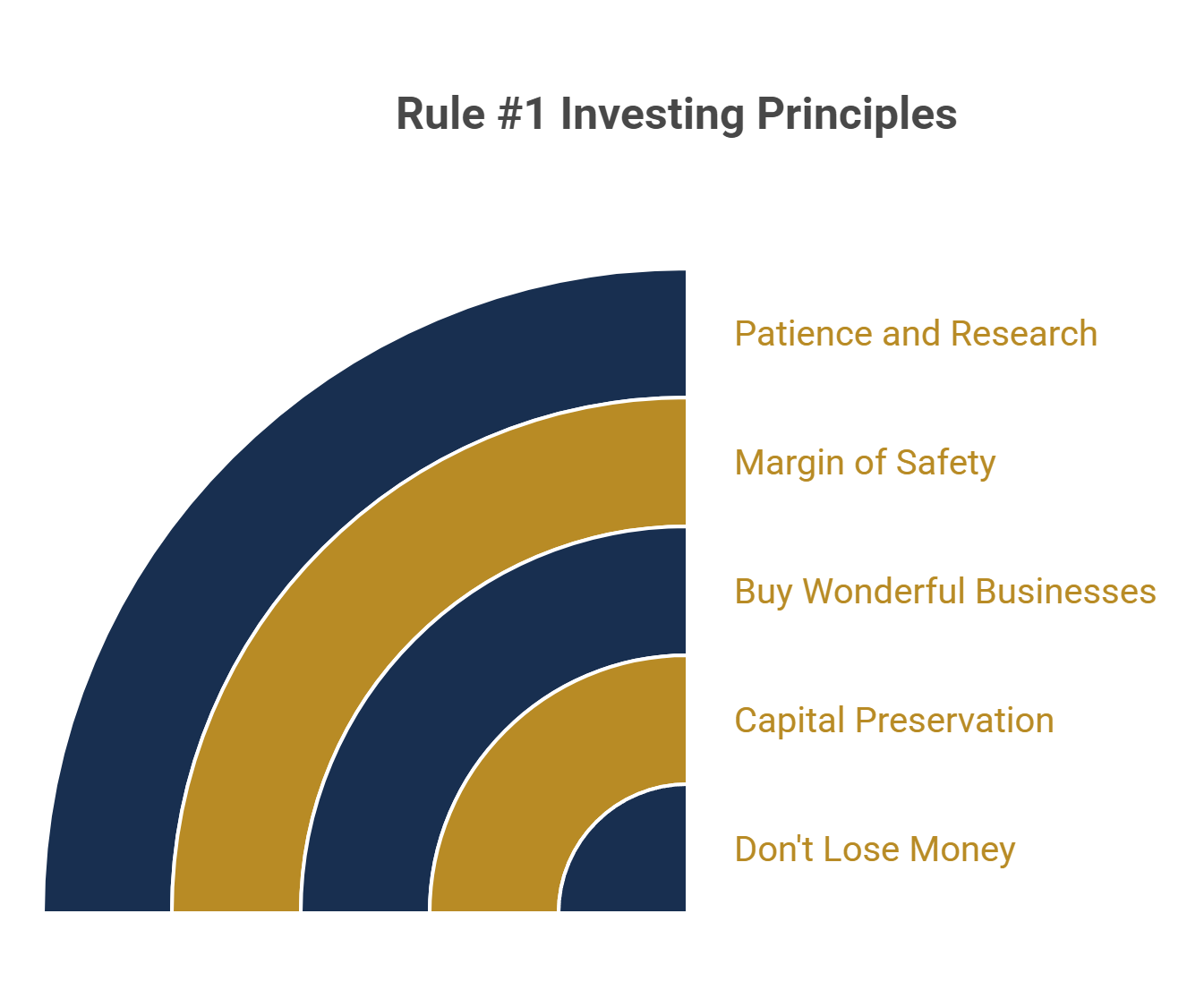
At the heart of Rule One Investing is a principle so simple, it's often underestimated: Don't lose money. This isn't just a catchy phrase. It's the foundation of everything we teach, and it's the reason Rule #1 investors have the confidence to build real, lasting wealth.
What Does "Don't Lose Money" Really Mean?
Warren Buffett famously said, "There are only two rules of investing. Rule #1: Don't lose money. Rule #2: Never forget Rule #1." I took this to heart and built an entire investing system around it. But what does it mean in practice?
It means that every investment decision starts with one question: How do I protect my hard-earned money? Just as a doctor's first oath is to "do no harm," a Rule #1 investor's first responsibility is to avoid unnecessary risk and preserve capital.
Why Capital Preservation Comes First
If you never lose money, your positive returns will compound over time, steadily building your wealth. Even if you make a few mediocre investments, as long as you don't give back your gains, you'll continue to move forward. The key is to avoid the big mistakes, the ones that set you back years or even decades.
How Rule #1 Investors Avoid Losing Money
Only Buy Wonderful Businesses: A wonderful business is one you deeply understand, that aligns with your values, and that has a proven track record of financial strength and predictability. If you wouldn't be proud to own the whole company, don't buy a single share.
Insist on a Margin of Safety: Never pay full price. Rule #1 investors determine the true value of a business, the Sticker Price, and then wait to buy it at a significant discount, ideally 50% off. This Margin of Safety acts as a buffer against mistakes, market downturns, or unexpected events. If you're not getting a Margin of Safety, you don't buy. Even Warren Buffett insists on this principle.
Be Patient, Wait for the Right Opportunity: You don't have to invest just because you have money sitting in your account. Rule #1 investors wait for an unmistakably attractive opportunity, a great company at a bargain price. This patience is what sets you apart from traders and speculators who chase every trend.
Do Your Homework, Never Speculate: Every investment is backed by thorough research and a clear understanding of the business. Rule #1 investors don't gamble on tips, rumors, or hot stocks. If you're not sure, you simply don't invest.
The Power of Saying "No"
Most people lose money not because they pick the wrong stock, but because they invest without a rational process. Rule #1 teaches you to say "no" to anything that doesn't meet your strict criteria. This discipline is your greatest protection against loss.
The Result: Certainty and Confidence
When you follow Rule #1, you're not just hoping for good results. You're investing with certainty. You know you're buying a wonderful business at an attractive price, with a built-in Margin of Safety. That's how you avoid losses, sleep well at night, and steadily build wealth for yourself and your family.
Key Takeaway: Rule #1 isn't about avoiding all risk. It's about eliminating unnecessary risk through discipline, research, and patience. It's about treating your money with the care it deserves, so you can achieve financial freedom and never have to start over.
The Contrarian Advantage: Why the "Little Guy" Can Outperform the Pros
You might think Wall Street has all the advantages, resources, information, and experience. But here's the secret: individual investors have unique strengths that big institutions can't match. Fund managers are pressured to show short-term results, chase trends, and stick with the herd. You, on the other hand, can be patient, focused, and independent.
Your Edge:
You don't have to answer to shareholders or quarterly reports.
You can wait for the right opportunity instead of feeling forced to act.
You can invest in what you truly understand and believe in.
Bottom Line: Patience and focus are your superpowers. Use them to your advantage.
The "Diversification" Delusion: The Case for a Focused Portfolio
You've probably heard that you should diversify by spreading your money across dozens of stocks and funds. But the world's best investors know that true wealth is built by knowing a few things very well, not by owning a little bit of everything. As Mark Twain and Warren Buffett put it: "Put all your eggs in one basket and watch that basket."
Why Focus Wins:
Deep research and understanding lead to better decisions.
Concentrating on a handful of wonderful businesses allows you to monitor them closely and act with conviction.
Over-diversification often leads to average results and diluted returns.
Rule One's Approach: We teach you to build a focused portfolio of great companies you truly understand, so you can invest with confidence and clarity.
What Makes Rule #1 Different From Every Other Beginner Guide
Go look at any beginner investing guide from Fidelity, Vanguard, or Schwab. They all teach the same thing: open a brokerage account, buy index funds, diversify. None of them answer the most important question: how do you decide whether a specific business is actually worth owning?
Rule #1 fills that gap with a concrete, repeatable process for evaluating any company before you put a dollar into it.
Former SEC Chairman Arthur Levitt reviewed this methodology and said investors who follow these principles will leave most mutual fund managers in the dust. Over two million people have gone through Rule #1 training. More than 25,000 have attended our workshops across 56 countries. The methodology has been featured on CNBC, Fox Business, CNN, PBS, and Yahoo Finance.
That process starts in the next section. If you want to go deeper alongside live coaches, join us at the Virtual Investing Workshop.
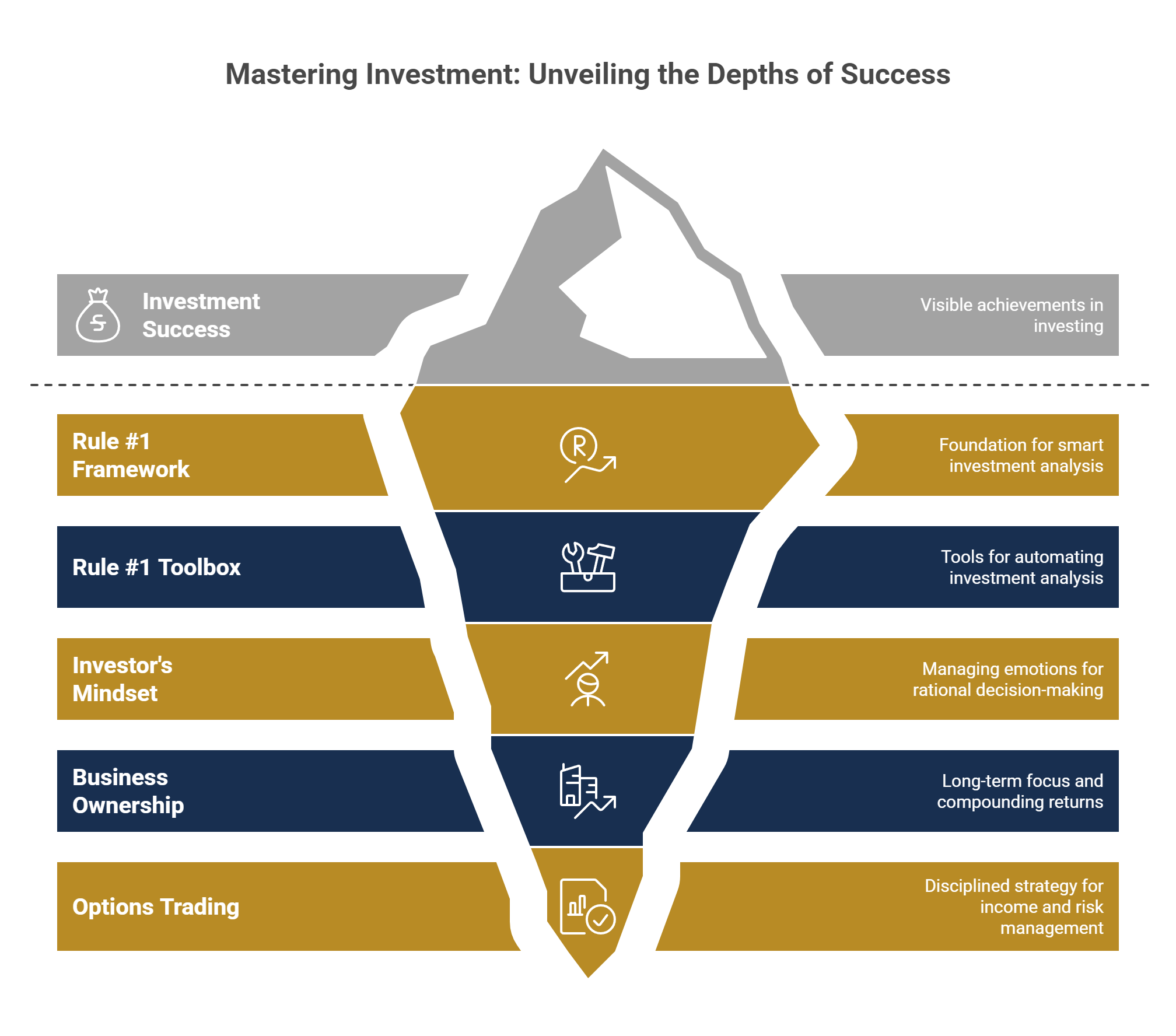
The Rule #1 Framework: Your System for Finding Wonderful Companies at Attractive Prices
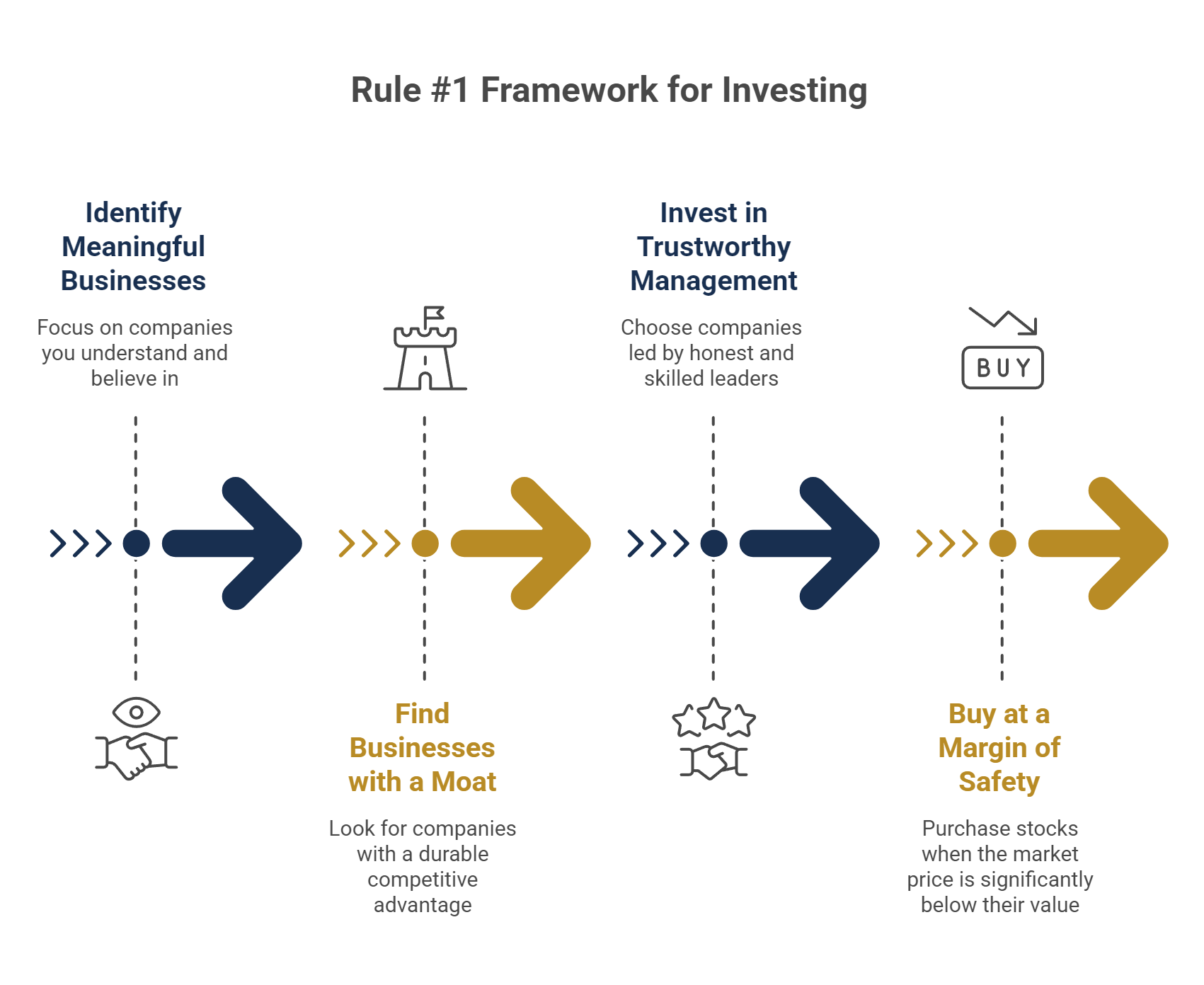
The Rule #1 Framework gives that philosophy a practical structure. Let's break down theFour Ms framework, the four pillars at the core of everything I teach.
M #1: Meaning – Invest in What You Understand and Believe In
The first step is to focus on businesses that have genuine meaning to you. This is not just about picking companies you like. It is about defining your circle of competence. When you invest in businesses you truly understand, you gain an informational edge and the conviction to hold through market ups and downs.
Ask yourself:
Would I be proud to own this whole company?
Do I understand how it makes money?
Does it align with my values?
If you work in healthcare, you likely have deeper insight into medical device companies than most analysts on Wall Street. If you have spent years in technology, you have a real edge evaluating software businesses. That edge matters. It gives you the confidence to make sound decisions and the patience to stay the course when others panic.
M #2: Moat – Find Businesses with a Durable Competitive Advantage
A moat is what protects a business from competitors and keeps its profits safe over time. The wider the moat, the more likely the company can sustain its success for years to come.
There are six types of moats to look for:
Brand Moat: Think of Coca-Cola or Google, brands so powerful their name becomes synonymous with the product itself.
Price Moat: A company that can either offer the lowest prices like Walmart, or raise prices without losing customers like Apple, thanks to strong loyalty or cost advantages.
Secrets Moat: Intellectual property, patents, or trade secrets that competitors cannot replicate. Coca-Cola's secret formula is the classic example.
Switching Moat: When customers find it too difficult or costly to leave. Apple product users know this feeling well.
Toll Bridge Moat: Unique assets like railroads or utilities where meaningful competition is nearly impossible.
Network Moat: Platforms like Facebook where the sheer size of the user base becomes the advantage itself.
Watch for these warning signs of a deteriorating moat: declining market share, shrinking margins, or disruptive new competitors gaining ground.
M #3: Management – Invest in Leaders You Can Trust
A great business can be ruined by the wrong leadership. I look for management teams with integrity, skill, and a track record of making smart decisions with company capital.
What to look for:
Honest, transparent communication. Read the CEO's annual letter and see if they acknowledge mistakes.
High Return on Invested Capital (ROIC), which tells you management is deploying money wisely.
Shareholder-friendly policies like sensible buybacks and dividends.
Red flags to watch for:
Excessive executive compensation, frequent accounting changes, or a pattern of poor capital allocation decisions.
The best leaders think like long-term owners. Make sure you are investing alongside people who treat shareholders like partners.
M #4: Margin of Safety – Only Buy When the Price Protects You
This is the most important of the four Ms. The Sticker Price is what a business is actually worth. I only buy when the market price is at least 50% below that number. That discount is my cushion against being wrong and my accelerant when I am right.
Use our Margin of Safety calculator to find the Sticker Price of any business you are watching. Enter a few key numbers and it does the work for you.
The Big Five Numbers: How to Confirm a Company Is Worth Owning
The Four Ms tell you what kind of business to look for. The Big Five Numbers tell you whether the financial reality backs it up.
I never buy a business with bad Big Five numbers. If a company has a real moat, it will show up here. If the numbers are weak or inconsistent, I move on, no matter how much I like the business on the surface.
https://www.youtube.com/embed/7ttssf46h3A?si=FPNoy52gHs0dSn7v
Here are the five numbers I look at, and what each one tells me:
Return on Invested Capital (ROIC): This measures how effectively a company uses the money invested in its operations to generate profit. It is the single most important of the five numbers. A company that consistently earns strong returns on its capital is doing something others cannot easily replicate. Look for 10% or higher, averaged over 10 years.
Sales Growth Rate: Revenue needs to grow for a business to compound in value over time. Flat or declining sales is a warning sign that the moat may be eroding. Look for 10% or higher, averaged over 10 years.
Earnings Per Share (EPS) Growth Rate: This tells you whether the company is actually becoming more profitable per share over time. Growing sales mean nothing if earnings are not following. Look for 10% or higher, averaged over 10 years.
Equity (Book Value) Growth Rate: Equity is the net worth of the business. Consistent equity growth tells you the company is building real value year after year, not just moving numbers around. Look for 10% or higher, averaged over 10 years.
Free Cash Flow Growth Rate: Free cash flow is the money left over after the business maintains and grows its operations. Consistent free cash flow growth is one of the clearest signs of a healthy, durable business. Look for 10% or higher, averaged over 10 years.
The Debt Check
Once the Big Five pass, take a quick look at long-term debt. Divide the company's total long-term debt by its current free cash flow. If it can pay off that debt within three years, the debt load is manageable. If it cannot, that is a red flag worth taking seriously.
How to Use These Numbers
All five pass the 10% threshold and debt is manageable? Move on to valuation and calculate your Margin of Safety. One number fails? Move on to the next company. The goal is to find businesses where the answer is obvious, not ones where you have to talk yourself into it.
You can find these numbers yourself on financial websites, but it takes time to pull and calculate each one manually. That is exactly why we built the Big Five Numbers resource and the Rule #1 Toolbox, which runs these calculations automatically so you can evaluate companies in minutes rather than hours.
Once you have confirmed the Big Five, use the Margin of Safety calculator to determine your buy price. This is the foundation of how to invest in stocks for wealth building; not speculation, not tips, but a repeatable process grounded in the numbers.
https://www.youtube.com/embed/qrwjyp6lQbQ?si=VTkwYwABYYfvzpPo
From Framework to Mastery: Gaining Your Unfair Advantage
Understanding the Rule #1 Framework is your foundation. Mastering it means developing the mindset, discipline, and judgment that separate investors who build real wealth from those who just follow the crowd.
The Rule #1 Toolbox: Your Shortcut to Smart Analysis
Calculating the Big Five by hand is doable. But it is time-consuming, especially when you are evaluating multiple companies. That is exactly why we built the Rule #1 Toolbox.
The Toolbox is a suite of proprietary tools that automates the hard work of analysis so you can focus on the decisions that matter.
What it does for you:
Automatically calculates the Big Five Numbers, ROIC, and growth rates for any company
Generates the Sticker Price and Margin of Safety in seconds
Lets you build and manage a watchlist so you know exactly when a company hits your buy price
Includes video tutorials and resources to help you use every tool with confidence
The gap between knowing the framework and applying it consistently is where most beginners stall. The Toolbox bridges that gap. It gives you the discipline of the process without the friction of doing every calculation from scratch.
The Investor's Mindset: Mastering Greed, Fear, and Patience
The stock market is not just a numbers game. It is a mental game. Even the best system can be derailed by emotion. The world's best investors know how to manage their psychology, staying calm and rational when others are driven by greed or fear.
Key mindset principles to develop:
Patience Pays: The market rewards those who wait for the right pitch. Do not feel pressured to act just because others are.
Discipline Over Drama: Stick to your process, even when headlines scream panic or euphoria.
Stoic Resilience: Accept that setbacks and volatility are part of the journey. Learn from mistakes but do not let them define you.
Continuous Learning: The best investors are always students, reading, analyzing, and refining their approach.
Before making any investment, ask yourself: am I acting on logic or emotion? If it is emotion, pause and revisit your checklist.
Rule #1 vs. Other Strategies: Why Owning Businesses Beats Renting Stocks
There is a big difference between being a true investor and being a speculator. Many people rent stocks, buying and selling based on tips, trends, or short-term price swings. This approach is driven by emotion, leads to high fees, and rarely results in lasting wealth. Rule #1 investors think like business owners.
Why business ownership wins:
Long-Term Focus: You are not chasing quick wins. Wonderful businesses held as stocks for long term investment are how real wealth compounds. You benefit from their growth, innovation, and returns not over months but over years and decades.
Lower Stress, Fewer Fees: Fewer trades mean less stress and lower costs. You are not glued to the screen reacting to every market move.
Compounding Returns: By holding great companies, you let your money work for you year after year.
Peace of Mind: You know what you own, why you own it, and you are not at the mercy of market noise or hype.
The problem with renting stocks:
Short-term trading is a high-stress, high-fee game that often relies on luck rather than skill.
Chasing trends or hot tips leads to emotional decisions and costly mistakes.
Most traders underperform the market over time while incurring unnecessary risk.
Taking It to the Next Level: Options Trading the Rule #1 Way
Once you have mastered the art of buying great companies at a discount, you can unlock even more powerful strategies like options trading. But unlike the risky, speculative options trading you might see elsewhere, Rule #1 teaches options as a tool for the disciplined investor.
How options fit the Rule #1 philosophy:
Generate Extra Income: Use conservative options strategies like selling cash-secured puts or covered calls to earn additional income on companies you already want to own.
Buy at an Even Better Price: Selling puts allows you to get paid while waiting to buy a wonderful business at your target price, effectively getting paid to be patient.
Manage Risk: Options can be used to protect your portfolio, not just to speculate.
Every options trade is backed by the same research, discipline, and focus on capital preservation as your stock investments. No gambling, no guessing, just smart strategic moves that align with your long-term goals.
Danielle Town's Story: What Happens When You Actually Learn How to Invest the Rule #1 Way
People often tell me they are not the investing type. Too complicated. Too risky. Not for someone like them.
My daughter Danielle used to say the same thing.
Danielle is a Wellesley, Oxford, and NYU Law-educated attorney. She is one of the sharpest people I know. And for years she wanted nothing to do with investing. She thought it was not for her, that the learning curve was too steep and the whole thing too intimidating.
Eventually she agreed to spend a year learning the Rule #1 methodology with me from scratch. She documented the entire journey in her book Invested, asking every question a beginner would ask, working through every fear, and applying the framework step by step.
By the end of that year, she was investing with confidence.
That story matters because Danielle is not an outlier. She is exactly the kind of person this methodology was built for. If a lawyer who resisted this for years can learn it, so can you. The framework is teachable. The process is repeatable. And you do not need a finance background to follow it.
The Virtual Investing Workshop is where that kind of learning happens in a structured, hands-on environment. It is designed for people who are starting exactly where Danielle started.
Ready to Master This System? Join Thousands on the Path to Financial Freedom
You have learned the framework. You understand moats, management, Sticker Price, and Margin of Safety. You may still be asking yourself: what stocks should I invest in?
That is exactly the question the Virtual Investing Workshop is designed to answer, not with a list of picks, but with the skills to evaluate any company yourself.
We do not just talk at you for three days. You practice in real time with live Rule #1 mentors. You work through actual company valuations, ask every question you have, and leave with a personalized watchlist of businesses that fit your criteria and your circle of competence.
Here is what the three days look like:
Step-by-step guidance through the full Rule #1 process, from finding meaning to calculating your buy price.
Real-world company analysis with coaches alongside you, not just slides in front of you.
A watchlist you built yourself, using your own research and your own judgment.
Access to our tools and resources to support your analysis long after the workshop ends.
My goal has always been the same: to teach people how to take control of their finances so they do not have to pay someone else who will get them a mediocre return at best.
If you show up ready to learn, I will make sure you know what you are doing.

Phil Town
Phil Town is an investment advisor, hedge fund manager, 3x NY Times Best-Selling Author, ex-Grand Canyon river guide, and former Lieutenant in the US Army Special Forces.